SITUATIONIST NATIONAL
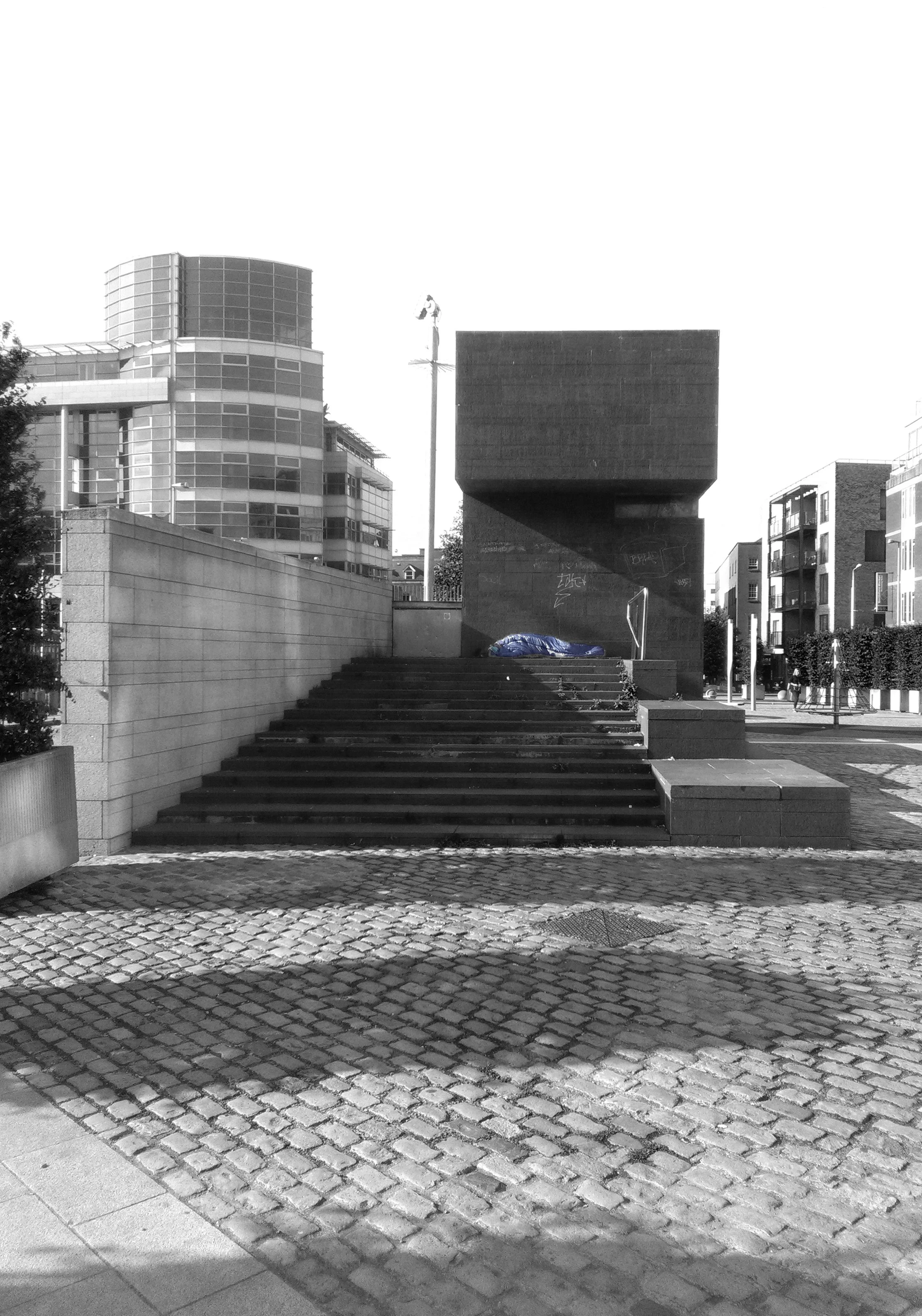
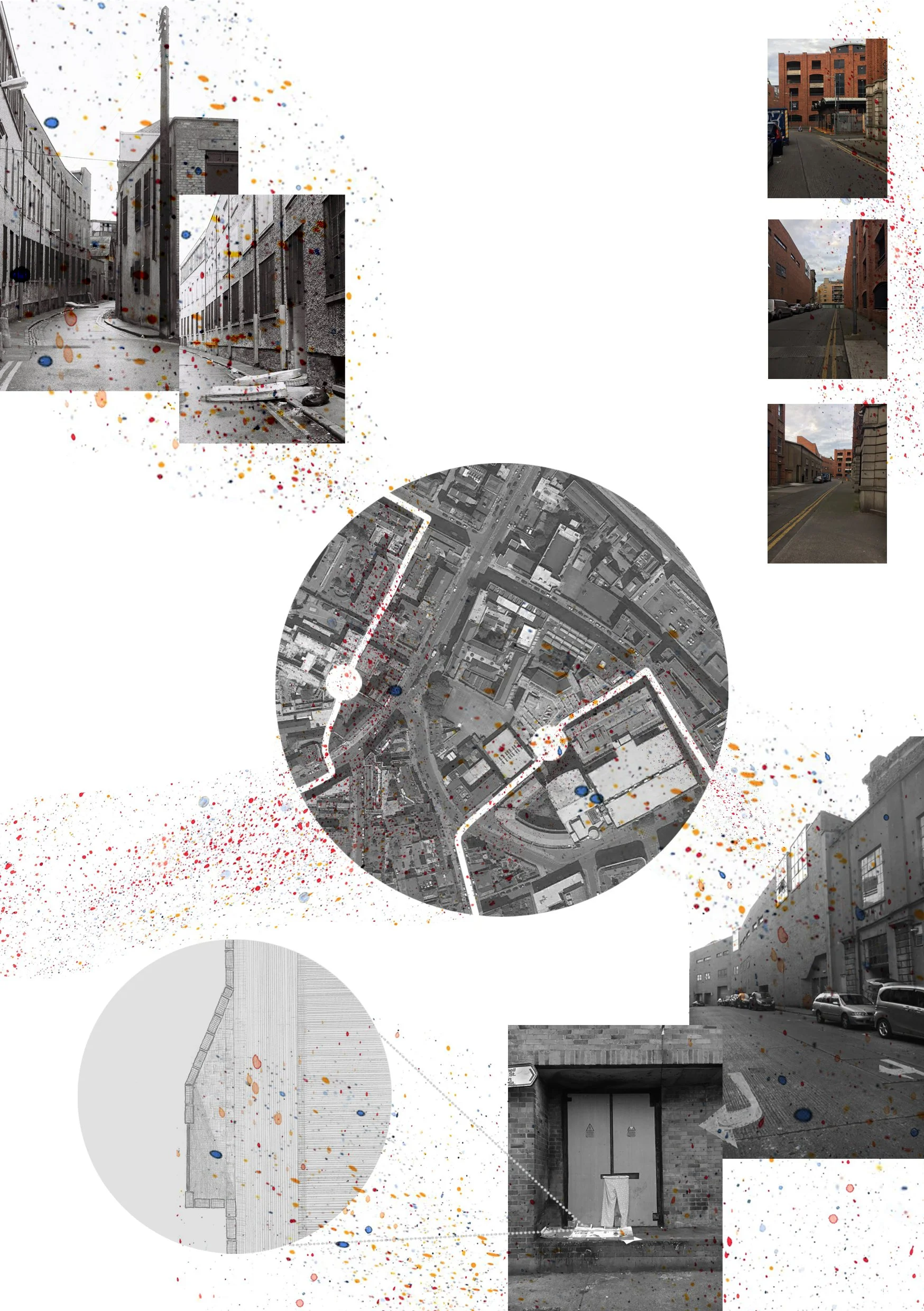
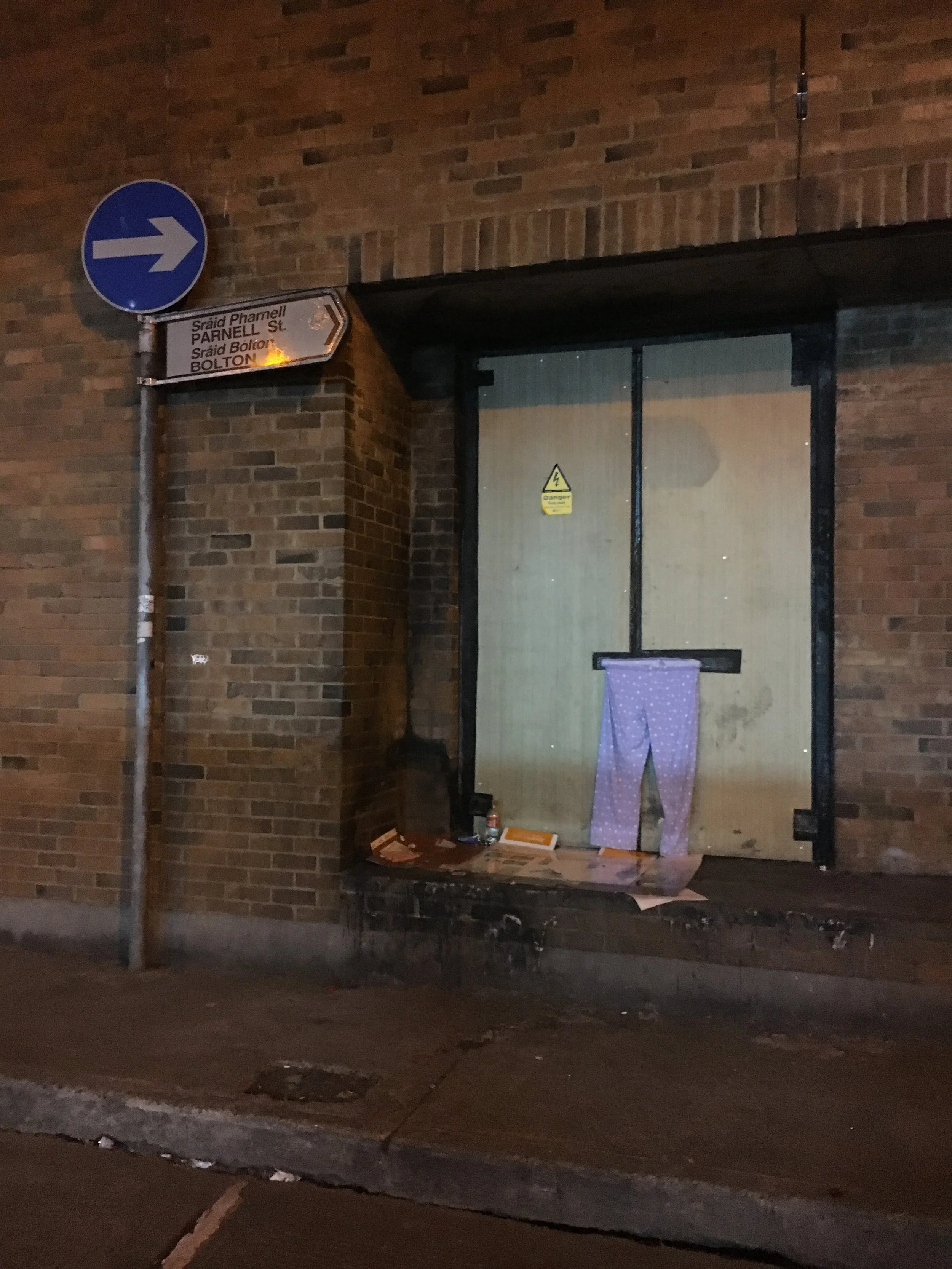
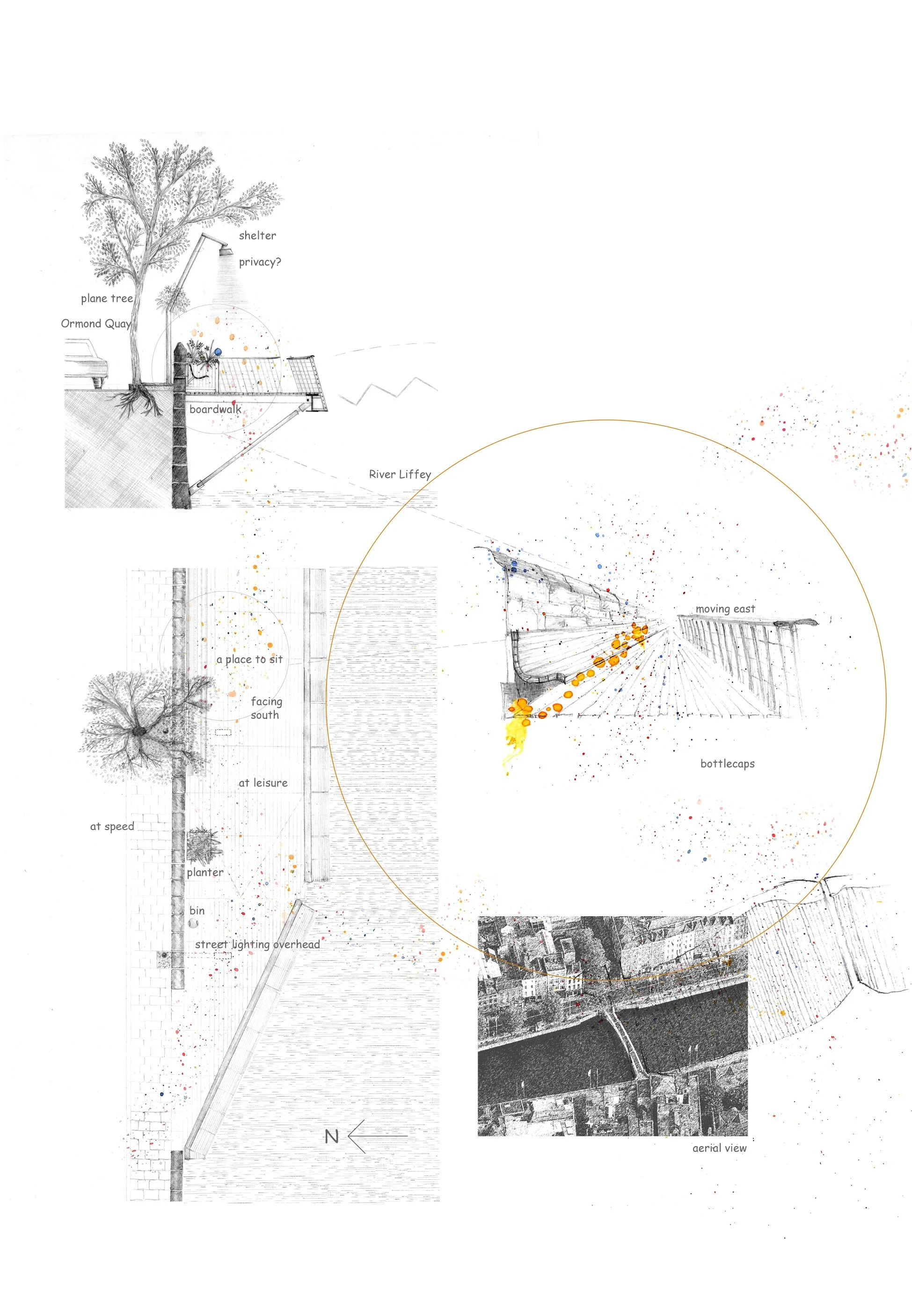
The human scale of homelessness is not something we can fully examine without ‘seeing’ through different lenses and from different perspectives. Experimenting with the form of the illustrated essay, this research questioned how the habitual journeys and spatial experiences of those who are homeless in Dublin city might be represented and also explored how the dynamic, temporal activities of public space can be disseminated.
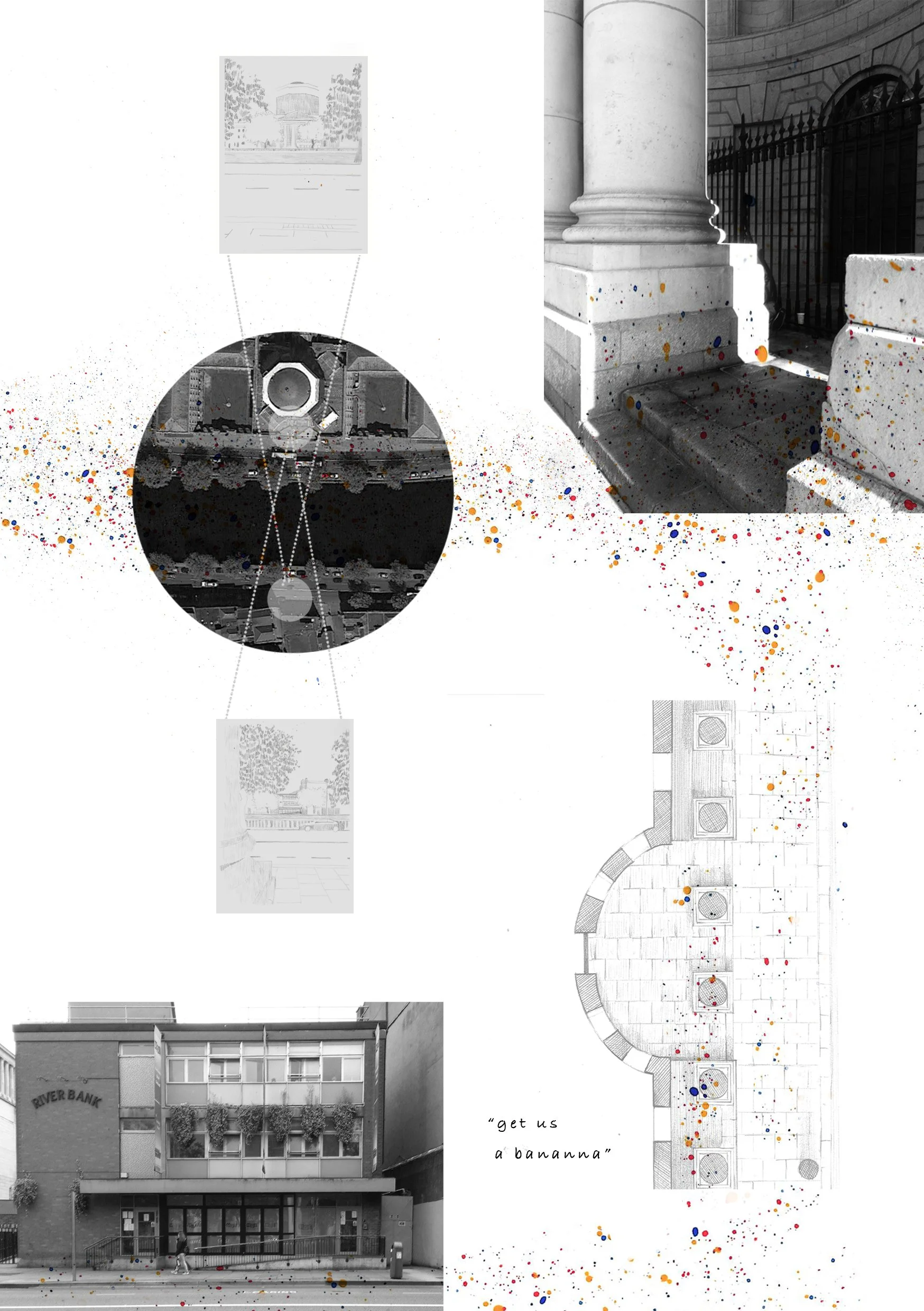
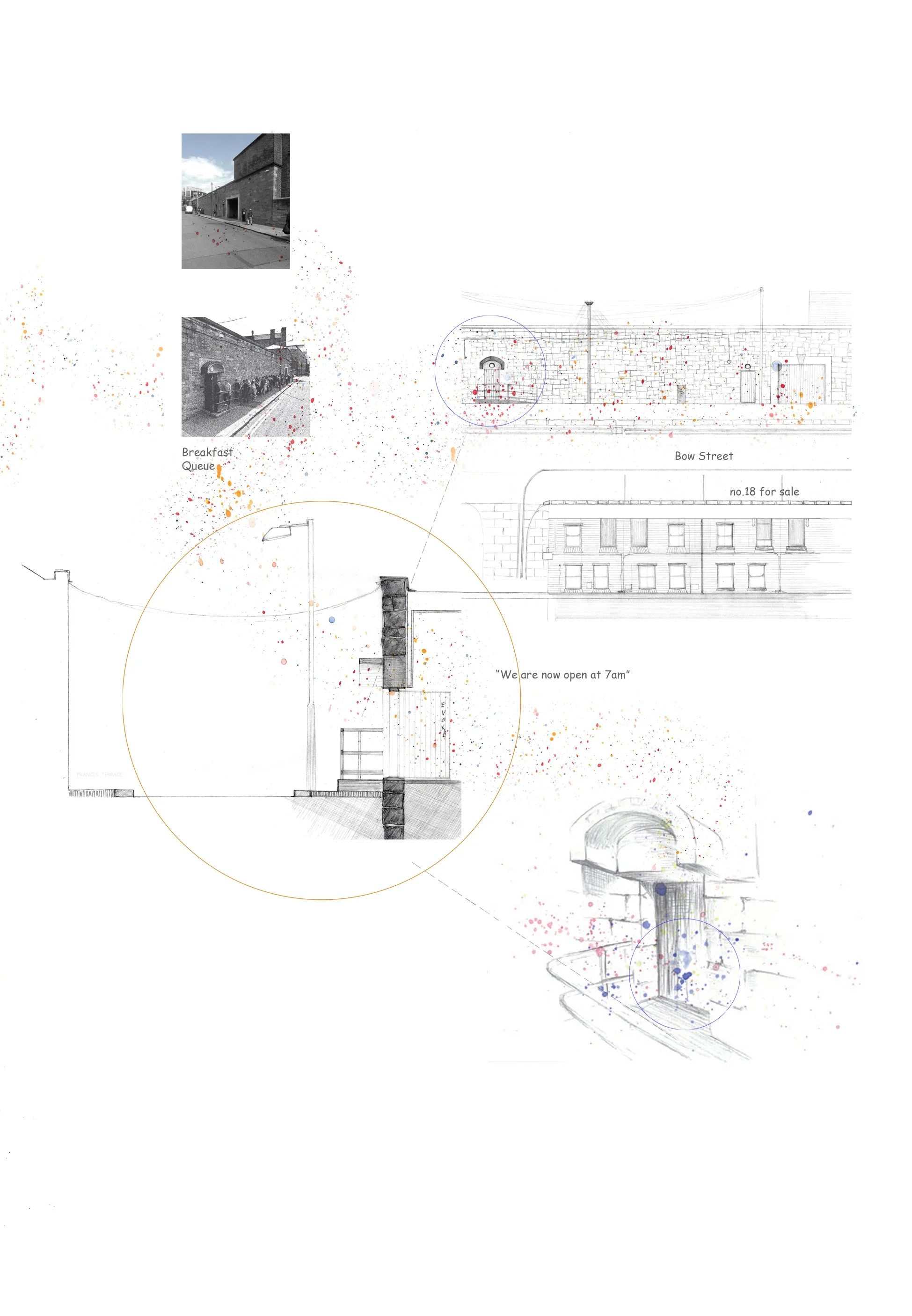
We adopted the position of surveyor in the public realm making analyses of urban activity, movement and the body in the public realm. The approach consists of mapping, surveying and recording both the physical and cultural landscape of public realm. This field research is then depicted in a narrative of ‘constructed situations’ capturing the human sites of homelessness in the street and in the city. The photographs and drawings aim to re-represent the ‘familiar’ and focus the reader’s attention on the more marginal activities of public space in order to find new insights into the spatial fabric that surrounds us.
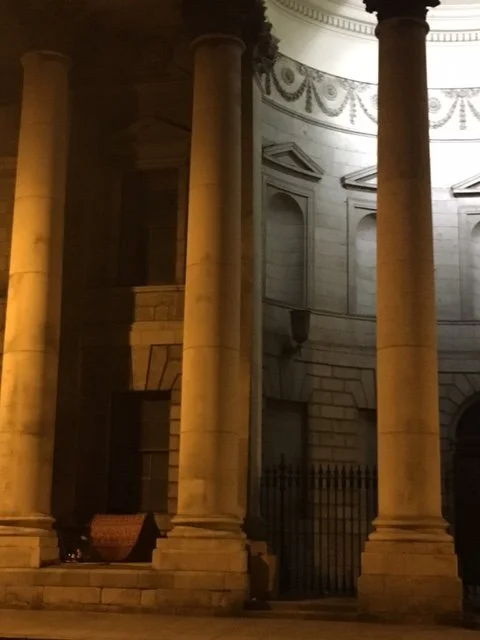
While the growing presence of rough sleepers and street begging visibly demonstrates the extent of the housing crisis, it also highlights another way that the spaces of the city, its streets, doorways, bridges and steps are being utilised. As architects, we are interested in the heterotopia of a home within the city or a living room within the street. As these spaces become domesticated, their social life then transforms our reading of public space and challenges the idea of a public and private realm.
Through this intimate mapping of the floors of the city’s appropriated living rooms, the paper attempts to visually measure the spatial and phenomenological experiences of disrupted individual and collective space.
The essay ‘Situationist National; Mapping Urban Living Space’ was presented at the AIARG 7 in 2018 and was published in Building Material 22. The essay can be viewed here.